
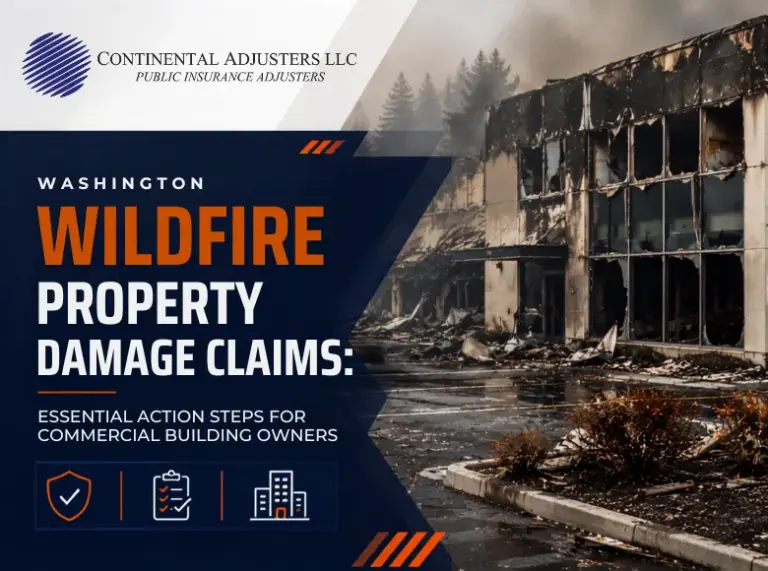
Wildfire damage to a commercial property in Washington can result in a claim that is more extensive and complex than many property owners anticipate. Filing a claim with your insurer is only the beginning, and an initial inspection may not capture the full scope of the loss. This guide explains the key components of a commercial wildfire claim and how a wildfire property damage public adjuster can help protect your recovery. It also outlines common mistakes that may reduce settlements, the issues experienced adjusters evaluate, Washington regulations affecting these claims, and best practices for documenting the full extent of a loss.
During the 2026 Washington wildfire season, the Washington State Office of the Insurance Commissioner (OIC) has issued consumer guidance, continues to assist policyholders with wildfire losses, and to remind insurers of their obligations under Washington law. Although these protections are important, complex commercial property claims can still be challenging to manage without professional guidance.
Key Takeaways
- Washington’s Insurance Commissioner provides guidance and protections for wildfire-affected policyholders, but many property owners may not be aware of these resources when a loss occurs.
- Smoke damage claims may be undervalued when HVAC contamination and interior air-quality impacts are not documented separately from structural fire damage.
- A wildfire property damage public adjuster can develop a coordinated strategy for both property damage and business interruption claims, helping to document the full scope of the loss.
- Washington wildfire legislation enacted or considered in 2026 is influencing how insurers assess and report commercial fire risk.
What Does a Commercial Wildfire Insurance Claim Actually Involve?
A commercial wildfire insurance claim can involve multiple categories of loss, including structural fire damage, smoke damage, other property damage, and business interruption losses when operations are disrupted. Because insurers may evaluate these components separately, each category should be clearly identified, documented, and supported. Failing to distinguish among the various components of a loss may result in portions of the claim being overlooked or undervalued.
Common Property Owner Mistakes After Major Wildfire Damage
One significant mistake is treating the insurer’s initial inspection as a complete assessment of the loss. An initial inspection may not identify concealed, secondary, or developing damage. Property owners may also begin repairs before documentation is complete, discard smoke-damaged inventory without creating an itemized record, or underestimate the duration and financial impact of an evacuation order. Each of these actions can make it more difficult to substantiate property damage and business interruption losses.
What Does a Wildfire Property Damage Public Adjuster Look For?
Experienced public adjusters evaluate more than visible fire damage. HVAC systems that circulated smoke may retain particulate contamination long after the fire has been extinguished, yet this aspect of a loss can be overlooked if it is not specifically inspected and documented.
Adjusters also evaluate secondary damage, including structural components warped by extreme heat, ash or smoke residue within wall cavities, and building code upgrade costs triggered by current construction requirements. Each may represent a separate component of the claim that can be missed in a self-filed submission.
Washington Wildfire Insurance Regulations Affecting Commercial Property Claims
Washington’s 2026 wildfire risk-score transparency legislation would require insurers to disclose how third-party wildfire risk scores are used, explain the factors contributing to those scores, and provide property owners with a process for appealing inaccurate results. The bill passed the state Senate during the 2026 legislative session.
Separately, Substitute Senate Bill 5419 requires insurers writing commercial and personal fire coverage to report fire-loss data to the OIC, with the first attestation form due December 31, 2026. For commercial property owners, these developments reinforce the importance of maintaining a thorough, well-supported claim file and understanding the regulatory environment surrounding wildfire losses. (Source: Washington OIC)
How to Document a Commercial Wildfire Insurance Claim
| Documentation Area | What to Capture | Why It Matters |
| Structural damage | Photos and video before any cleanup, plus contractor damage assessments | Forms the foundation of the property claim |
| Smoke and air quality | HVAC inspection reports and particulate testing results | Supports a separate evaluation of smoke and air-quality impacts |
| Inventory and equipment | Itemized inventory with pre-loss values or receipts | Supports valuation and depreciation calculations |
| Business interruption | Financial records, lost contracts, and evacuation dates | Connects operational downtime and financial losses to the wildfire event |
Commercial Wildfire Insurance Claim Trends for 2026
Wildfire risk scoring is becoming an increasingly important factor in commercial underwriting, extending beyond geographic location alone. Seasonal dry conditions across Washington may also cause insurers to reassess exposure during the wildfire season rather than waiting until renewal. For commercial property owners, these trends may lead to greater scrutiny of wildfire-related claims and underscore the importance of complete, well-organized documentation.
Common Mistakes to Avoid During a Commercial Wildfire Insurance Claim
- Signing a proof of loss before business interruption calculations are complete.
- Allowing repairs to begin before the property’s condition and full scope of damage have been adequately documented.
- Assuming that smoke damage without visible charring is not covered under the policy.
Final Thoughts
When wildfire damages a commercial property in Washington, filing the insurance claim is only the first step. Pursuing the full value of the loss requires detailed documentation, a careful review of the commercial insurance policy, and a deliberate claims strategy. A wildfire property damage public adjuster can help identify overlooked damage, document losses accurately, and support negotiations involving both property damage and business interruption losses.
Washington has established protections and guidance for eligible wildfire-affected policyholders, but commercial claims remain complex. Working with experienced claim professionals can help property owners present a complete, well-supported claim and pursue the recovery available under their policy.
FAQs
What should I do immediately after wildfire damage to my commercial property?
Prioritize safety, then document the damage with photographs and video before cleanup or repairs begin, when it is safe to do so. Take reasonable steps to prevent additional damage, notify your insurer, and retain records of all related expenses. For a large or complex loss, consider having the claim reviewed by a public adjuster before accepting a settlement offer.
How is smoke damage handled in a commercial wildfire insurance claim?
Smoke damage should be documented separately from structural fire damage when it represents a distinct component of the loss. HVAC systems may retain particulate contamination after a wildfire, so inspection reports and air-quality or particulate testing can provide important supporting documentation. Failing to document smoke and air-quality impacts separately may make the full extent of the loss more difficult to establish.
How long can business interruption coverage apply to lost income after a wildfire?
The applicable period depends on the terms and conditions of the policy and the time reasonably required to restore operations. Evacuation orders, access restrictions, and additional expenses may affect the duration and amount of the loss. Financial records and clearly documented evacuation or closure dates can help establish the connection between operational downtime and the wildfire event.
Can FEMA help after a wildfire?
FEMA may provide financial assistance for eligible wildfire losses when a federal disaster declaration is in effect. FEMA assistance does not replace insurance coverage and is generally intended to address eligible uninsured or underinsured losses. The availability and scope of assistance depend on the specific disaster declaration and applicable program requirements.
When should I involve a wildfire property damage public adjuster?
Consider involving a public adjuster early in the claims process, particularly before finalizing a proof of loss or accepting a settlement. Early representation can help ensure that structural damage, smoke-related impacts, and business interruption losses are documented thoroughly. This can be especially important for large or complex commercial claims in which the initial assessment may not reflect the full scope of the loss.
Protect Your Commercial Property Claim from the Start
If your Washington commercial property has sustained wildfire, smoke, or other fire-related damage, careful claim preparation is essential. Continental Adjusters LLC brings decades of experience to complex commercial property claims, including structural damage and business interruption losses. Contact our team for a claim review before finalizing claim documents or accepting a settlement from your insurer.