

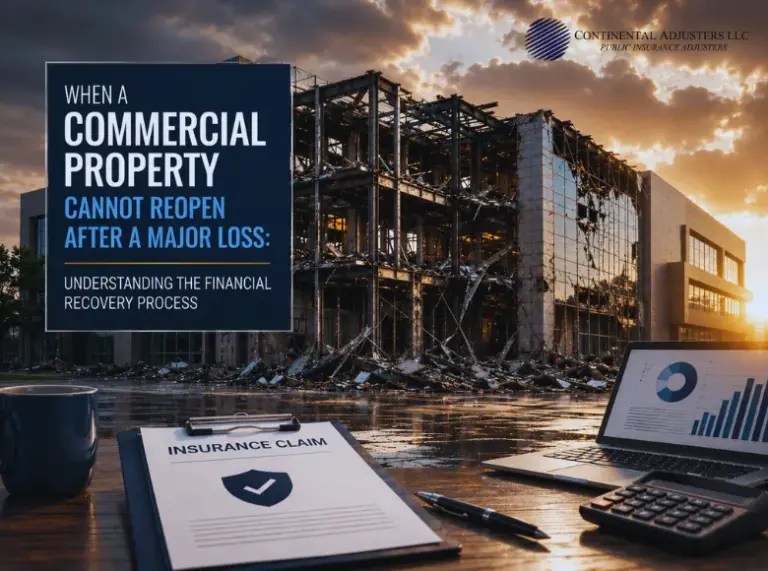
A major commercial property loss can put a business in a tough spot. The building may need extensive repairs, equipment and inventory may be damaged, employees may be unable to work, and revenue may keep slipping while operations stay suspended.
The challenge is that rebuilding the property is only part of the recovery process. Commercial property loss recovery can also involve business interruption, damaged contents, continuing expenses, and other financial fallout. Understanding the full scope of the claim can make it easier for a business owner to make informed decisions during an already difficult time.
Why a Major Loss Can Keep a Business Closed
A commercial property may look repairable while still being unsuitable for normal operations. Fire, water, storm, hurricane, and other major losses can affect structural components, electrical systems, HVAC, plumbing, flooring, and equipment.
Some damage stays hidden until restoration or demolition begins. For example, water damage from a leak or flood can affect areas behind walls or beneath flooring. This is why a detailed Commercial Property Loss Assessment should look beyond the most obvious damage.
The Financial Impact Can Continue
When a business can’t reopen, financial losses can continue even after the property damage itself has been documented. Revenue may decline while certain operating expenses are consistent. Depending on the policy, business interruption coverage may address certain qualifying losses.
That calculation is rarely as simple as comparing revenue before and after the loss. Financial records, historical performance, continuing expenses, payroll, operating conditions, and the expected recovery period may all come into play.
What Commercial Property Damage Recovery Should Include
A complete Commercial Property Damage Recovery process should establish the full scope of the physical loss, including the building, structural components, equipment, inventory, furnishings, fixtures, tenant improvements, and damaged building systems. Photographs, contractor documentation, invoices, inventory records, and maintenance documents all help build a clear record, rather than relying only on a preliminary visual inspection.
Why the First Estimate May Not Tell the Whole Story
Large commercial losses tend to get more complicated as the property is inspected and repairs move forward. Hidden damage may surface, repair requirements can change, and equipment initially considered repairable may need to be replaced. During this time, business interruption losses continue to increase.
This doesn’t automatically mean an insurer’s first estimate is wrong, but it does mean business owners should understand exactly what’s been evaluated, what’s included, and what may still need attention.
Insurance Recovery Goes Beyond Repairs
Commercial Property Insurance Recovery can involve a lot more than the physical building. Depending on the policy, it may cover property damage, contents, equipment, business interruption, extra expenses, and other applicable coverages. This can be a lot to manage for an owner who’s also dealing with employees, customers, contractors, vendors, and reopening plans.
How a Public Adjuster Can Help
A public adjuster represents the policyholder rather than the insurance company. They can help document damage, develop the claim, review policy provisions, and negotiate with the carrier.
Continental Adjusters provides commercial public adjusting services to help property owners navigate complex claims, bringing the property, documentation, valuation, and financial aspects together into one organized strategy.
Business Interruption and the Role of Forensic Accounting
For some businesses, the biggest financial consequence of a major loss is simply the inability to operate. That’s where Business Property Loss Recovery calls for detailed financial analysis. A business may lose revenue while still covering certain expenses, and the length of the interruption can depend on repairs, equipment availability, permits, and restoration work.
When losses are substantial, forensic accounting can help analyze and document the economic impact. Continental Adjusters offers forensic accounting services for claims involving business interruption, lost revenue and profits, extra expenses, payroll continuation, and inventory loss analysis that’s especially useful when losses are hard to calculate from ordinary business records alone.
A Real Commercial Property Claim Example
In a Continental Adjusters case involving significant water damage at a country club, the insurance company’s initial estimate was approximately $1.1 million. After a more comprehensive assessment, the claim ultimately settled for $4.3 million.
This isn’t a guarantee that another claim will produce a similar result as every claim depends on its own policy language, damage, documentation, and circumstances. However, it’s a strong reminder that a first valuation doesn’t always represent the full scope of a complex commercial loss.
When a Commercial Claim Is Disputed
Large claims can sometimes lead to disagreements over damage, valuation, repairs, or policy interpretation. When appropriate, Continental Adjusters provides appraisal and umpire representation for disputed property claims, along with expert witness support for litigation or other formal proceedings that need specialized claims expertise.
Moving Forward After a Major Commercial Loss
When a commercial property can’t reopen, recovery involves more than repairing the building; it means understanding how the loss has affected operations and finances. The exact recovery available always depends on the policy and circumstances, but a well-documented, carefully evaluated claim gives a business owner a clearer picture of the loss and a stronger foundation for moving forward.
Frequently Asked Questions
1. What is commercial property loss recovery?
It’s the process of evaluating the physical, operational, and financial effects of a major property loss and pursuing the applicable insurance benefits under the policy.
2. What does a commercial property loss assessment include?
A Commercial Property Loss Assessment can evaluate damage to the building, building systems, equipment, inventory, contents, fixtures, and other affected property.
3. Can business interruption be part of a commercial property claim?
It can, depending on the policy and circumstances. Business interruption coverage may address certain qualifying income losses and continuing expenses tied to a covered property loss.
4. What does a public adjuster do?
A public adjuster represents the policyholder and can help document damage, prepare the claim, evaluate losses, review policy provisions, and negotiate with the insurance carrier.
5. When is forensic accounting useful?
Forensic accounting is useful when a claim involves substantial business interruption, lost revenue, continuing expenses, inventory losses, or other financial impacts that need detailed analysis.
Get Help With Your Commercial Property Claim
A major commercial property loss can affect your building, operations, revenue, and financial stability all at once. If your business is struggling to reopen or facing a complex insurance claim, Continental Adjusters can help evaluate the loss and provide professional commercial public adjusting, forensic accounting, appraisal and umpire representation, and expert witness support when appropriate — helping you understand the full scope of your loss and navigate recovery with organized documentation and careful evaluation.