

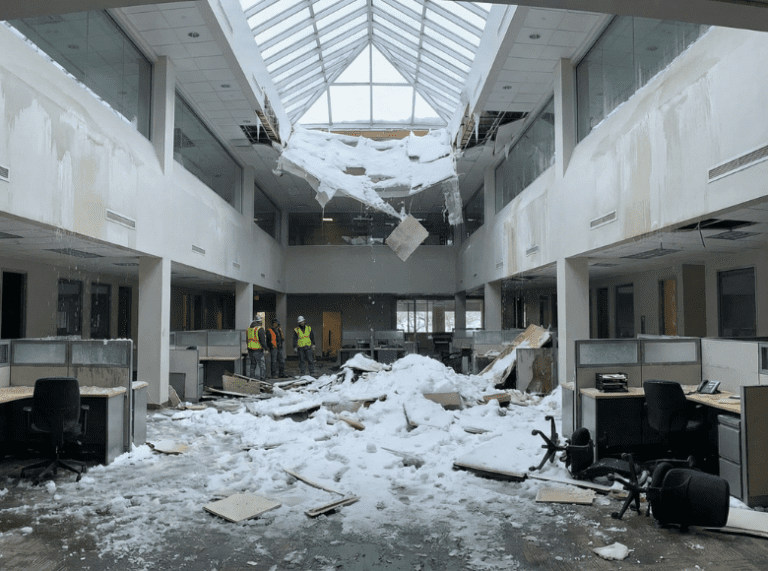
Heavy snowfall is not just an inconvenience for commercial property owners—it is a serious structural risk. Snow-related damage often develops out of sight, placing stress on roofs, drainage systems, and building components long before visible warning signs appear. By the time water infiltration, ceiling collapse, or operational disruption is discovered, the damage is often extensive and costly. Understanding how snow impacts commercial buildings—and how insurance responds—is essential to protecting both property and business continuity.
What Is Snow Damage in Commercial Properties?
Snow damage refers to physical loss or deterioration caused by the accumulation, melting, refreezing, or weight of snow and ice. In commercial buildings, the most severe risk is structural failure resulting from excessive snow load on roofs. Large, flat, or low-slope commercial roofs are particularly vulnerable because snow tends to accumulate evenly rather than slide off. When snow becomes wet and compacted, its weight can increase dramatically and exceed the roof’s design limits.
Excessive snow load can cause roof deflection, cracked supports, interior ceiling damage, and, in extreme cases, partial or total roof collapse. These failures occur suddenly, create immediate safety hazards, and often result in significant business interruption.
Snow accumulation also contributes to ice dam formation. As heat escapes from the building, rooftop snow melts and refreezes along roof edges. This ice traps additional meltwater and forces it beneath roofing membranes and flashing, leading to hidden leaks, insulation damage, and mold growth.
Snow and ice events are a major source of loss nationwide. Winter storms consistently rank among the most expensive weather events in the United States, causing billions of dollars in damage to infrastructure and commercial properties. These losses underscore that snow damage is neither rare nor minor—it is a recurring and serious risk for property owners.
Common Types of Snow Damage in Commercial Buildings
Roof Damage and Structural Failure
Excessive Snow Load: Heavy snow accumulation can exceed the structural capacity of commercial roofing systems. This may result in roof sagging, compromised trusses, interior ceiling failure, or full roof collapse. Flat roofs, metal roofs, and older or modified roofing systems face increased exposure.
Ice Dams and Water Intrusion: Ice dams trap melting snow and redirect water beneath roofing materials. Over time, this leads to roof leaks, saturated insulation, damaged drywall, and electrical hazards.
Gutter and Drainage System Damage: Snow and ice can bend, crack, or detach gutters, roof drains, and downspouts. Impaired drainage increases the likelihood of standing water, leaks, and long-term structural deterioration.
Water Damage from Melting Snow
Interior Flooding: Rapid snowmelt can overwhelm drainage systems, causing flooding in basements, mechanical rooms, loading docks, and lower-level tenant spaces.
Foundation and Structural Stress: Repeated freeze-thaw cycles from melting snow can crack concrete foundations, masonry walls, and structural joints, allowing water intrusion and accelerating long-term degradation.
Drainage and Sump Pump Failure: Excessive snowmelt may overload sump pumps and drainage infrastructure, resulting in mechanical failure and widespread interior damage.
Damage to Auxiliary Structures and Exteriors
Collapse of Attached Structures: Canopies, loading dock covers, parking structures, and enclosed walkways often have lower load capacities and are especially susceptible to collapse under heavy snow.
Fallen Trees and Utility Damage: Snow- and ice-laden trees frequently break or fall, damaging roofs, exterior walls, vehicles, and power lines, and causing extended business interruptions.
Frozen and Burst Pipes
Pipe Freezing: Prolonged cold temperatures and snow accumulation increase the risk of frozen pipes, particularly in unheated areas, exterior walls, mechanical rooms, and vacant spaces.
Pipe Ruptures: When frozen pipes thaw, cracks or ruptures release large volumes of water, damaging structural components, electrical systems, inventory, and tenant spaces.
Factors That Increase Snow Damage Risk
Certain conditions significantly increase vulnerability to snow damage:
- Wet or compacted snow, which is substantially heavier than dry snow
- Poor roof insulation or ventilation that accelerates melting and refreezing
- Blocked or poorly maintained gutters and roof drains
- Aging roofing systems or deferred structural maintenance
Preventing Snow Damage
While snow damage cannot always be avoided, risk can be reduced through proactive measures. Roofs should be inspected regularly, and snow should be removed when accumulation approaches design limits. Gutters and drains must remain clear throughout winter. Proper insulation and ventilation help limit ice dam formation, and routine structural maintenance reduces the likelihood of catastrophic failure.
How Snow Damage Insurance Claims Work
A snow damage insurance claim seeks coverage for property loss caused by snow, ice, or freezing conditions. Most commercial property insurance policies cover damage from the weight of snow or ice, roof leaks caused by melting snow, ice dams, frozen pipes, and resulting water damage—provided the loss is sudden and not caused by long-term neglect.
Steps to File a Snow Damage Claim
- Ensure safety first. Evacuate the building if structural integrity is compromised and shut off utilities if necessary.
- Document the damage. Take detailed photos and videos of all affected areas, including roof conditions and interior damage.
- Prevent further loss. Remove standing water, tarp damaged areas, and protect inventory. Retain receipts for emergency repairs.
- Notify your insurer promptly. Most policies require timely notice, often within 48 hours of discovery.
- Prepare a complete claim. Include repair estimates, inspection reports, and documentation of business interruption if applicable.
- Expect negotiation. Insurers may initially undervalue losses, particularly structural and hidden damage.
How Continental Adjusters Supports Snow Damage Claims
Continental Adjusters assists commercial property owners with complex snow damage claims by identifying visible and hidden damage, preparing detailed documentation, analyzing policy coverage, and negotiating directly with insurance carriers. This includes calculating business income losses using forensic accounting methods to support maximum recovery.
Professional representation is especially valuable in claims involving roof collapse, structural damage, ice dams, and prolonged business interruption. Proper documentation and advocacy can significantly improve outcomes and help property owners avoid settling for less than they are entitled to receive.
Final Thoughts
Heavy, accumulated snowfall poses a serious threat to commercial buildings. Roof collapse, water intrusion, structural stress, and frozen pipe failures can result in extensive property damage and operational disruption. Navigating a snow damage insurance claim requires technical knowledge, detailed documentation, and effective negotiation.
With the right preparation and professional support, commercial property owners can protect their assets, recover losses fully, and restore operations after severe winter weather.