

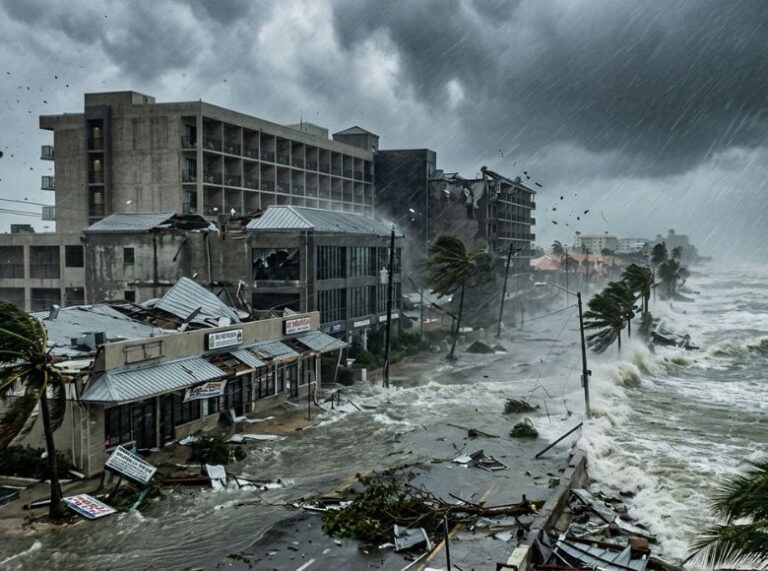
After a hurricane hits, the immediate danger may be over. However, for business owners, a new and often more complex challenge begins.
Standing in a damaged property, whether it’s a flooded interior, a compromised roof, or destroyed equipment, owners quickly realize that recovery is not just about repairs. It is about navigating an insurance claims process that is unfamiliar, technical, and often structured in favor of the insurer rather than the policyholder.
For many, this is their first time filing a large commercial property claim. What follows is not just paperwork; it’s a high-stakes financial negotiation that directly impacts how quickly and fully their business can recover.
The Reality Business Owners Face After a Hurricane
In the days following a storm, business owners are expected to make critical decisions while under pressure. They must:
- Assess and document extensive property damage
- Communicate with insurance carriers
- Interpret complex policy language
- Estimate repair and replacement costs
- Account for business interruption losses
At the same time, insurers deploy their own adjusters—professionals whose role is to evaluate the claim on behalf of the insurance company.
This creates a fundamental imbalance.
Most policyholders do not realize that the insurance adjuster assigned to their claim does not represent their interests. Their evaluation often becomes the basis for an initial settlement offer, which may not reflect the full scope or long-term impact of the damage.
Without expert guidance, business owners risk accepting settlements that fall significantly short of what their policy actually covers.
Why Hurricane Damage Is Often Underestimated
Hurricane-related damage is rarely limited to what is immediately visible. What appears to be minor damage can conceal more serious issues, including:
- Structural weakening from wind exposure
- Hidden water intrusion behind walls and under flooring
- Mold development and long-term deterioration
- HVAC, electrical, and mechanical system damage
- Loss of inventory, equipment, and operational capacity
Additionally, many business owners overlook one of the most significant financial impacts: business interruption losses, including lost revenue and ongoing expenses during downtime.
These complexities make accurate claim valuation extremely difficult without professional expertise.
The Role of a Public Adjuster
A public adjuster represents the policyholder—not the insurance company.
Their role is to level the playing field by managing the claim from start to finish and ensuring that all damages are properly identified, documented, and valued.
A licensed public adjuster provides:
- Comprehensive Damage Assessment
A detailed inspection of the entire property, including hidden and secondary damage that is often missed. - Claim Documentation and Preparation
Creation of a structured, evidence-backed claim package designed to withstand insurer scrutiny. - Policy Analysis
Interpretation of complex insurance language, including deductibles, exclusions, and additional coverages such as code upgrades and business income protection. - Negotiation with the Insurance Company
Direct engagement with the insurer to challenge low valuations and advocate for a fair settlement. - Dispute Resolution Support
Reopening or contesting denied or underpaid claims through strategic analysis and additional evidence.
In short, a public adjuster transforms the claims process from a reactive experience into a controlled, strategic negotiation.
Why Working with Continental Adjusters Makes a Difference
Continental Adjusters brings a level of expertise and scale that is particularly critical for commercial property owners recovering from hurricane damage.
With more than $4 billion recovered for policyholders, the firm has extensive experience handling complex, high-value claims across the United States and internationally.
Their approach combines technical precision with strategic advocacy, including:
- Full-Service Public Adjusting: From initial inspection through final settlement, ensuring no aspect of the claim is overlooked.
- Forensic Accounting: Accurate calculation of business interruption losses and financial impact.
- Expert Witness and Technical Support: Strengthening claims in disputed or litigated situations.
- Appraisal and Umpire Representation: Guiding clients through formal dispute resolution processes.
One notable example demonstrates the impact of this expertise: a commercial property initially offered a $40 million settlement ultimately secured $64 million after reassessment and negotiation—a 60% increase for the same loss.
This outcome highlights a critical reality—the difference in representation can significantly change the financial outcome of a claim.
Why Timing and Strategy Matter
One of the most important decisions a business owner makes is whether to accept the initial insurance settlement.
Once accepted, it becomes extremely difficult to recover additional funds—even if damage was underestimated.
Working with a public adjuster early in the process ensures:
- Damage is documented before cleanup alters evidence
- Claims are filed accurately and completely
- Settlement negotiations are based on full loss valuation
- Costly mistakes are avoided
Final Thoughts
A hurricane may last only hours, but the financial recovery process can take months—or longer—depending on how the insurance claim is handled.
For business owners, the difference between a delayed, underpaid claim and a fully realized recovery often comes down to one factor: representation.
Partnering with a public adjuster—especially an experienced firm like Continental Adjusters—provides the expertise, advocacy, and strategic oversight needed to secure the settlement your policy was designed to deliver.
Do Not Leave Your Recovery to Chance
If your business has suffered hurricane damage, the claims process is not something to navigate alone.
Continental Adjusters is prepared to guide you through every step—from initial assessment to final settlement—ensuring that your claim is handled with the precision and expertise it requires.