

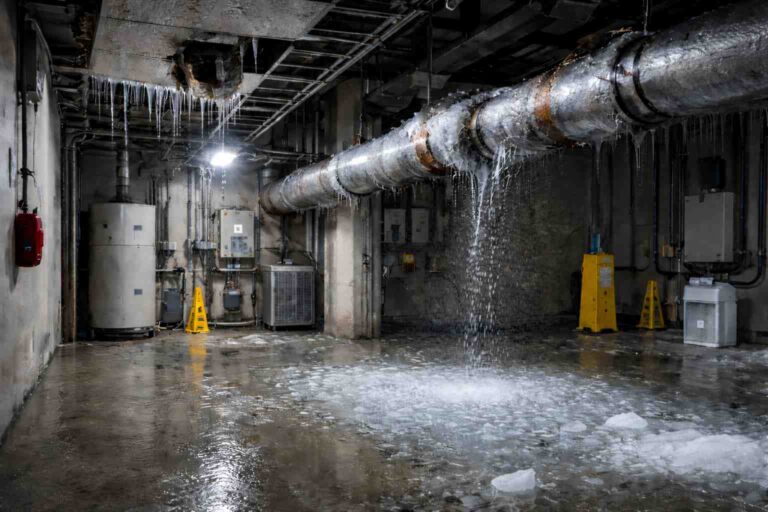
A single freezing night is all it takes for a quiet building to become a disaster site. When water inside plumbing freezes and expands, pipes can rupture without warning — shutting down operations, damaging assets, and triggering complex insurance claims.
Frozen pipe damage is one of the most common and expensive winter-related risks facing commercial properties in the United States. When a pipe bursts, the resulting water release can flood walls, ceilings, mechanical systems, inventory, and equipment. Beyond the physical damage, frozen pipe incidents can disrupt operations, displace tenants, and create long-term moisture and structural issues.
For commercial property owners, the consequences are not only physical — they are financial, operational, and strategic. This guide explains how frozen pipe damage happens, what insurance typically covers, and how the experienced public adjusters at Continental Adjusters help protect your claim outcome.
What Is Frozen Pipe Damage?
Frozen pipe damage occurs when water inside a plumbing system freezes and expands. Water expands by roughly 9% when it turns to ice, creating internal pressure that pipes cannot withstand. Once the pipe cracks, water escapes rapidly as temperatures rise.
According to U.S. insurance industry data:
- Water damage and freezing account for ~22%–29% of all property claims each year
- The average insurance claim for water or freezing losses is $11,000–$15,000
- Severe frozen-pipe claims routinely exceed $50,000
- Large commercial claims can exceed $1 million
(Source: Insurance Information Institute & industry loss analysis)
Why Commercial Properties Face Greater Risk
Commercial properties are particularly vulnerable because they often include:
• Extensive and complex pipe networks
• Unheated or partially heated areas
• High-value equipment and inventory
• Greater exposures from downtime, relocation, or tenant loss
A single burst line can impact multiple tenants, departments, or operational zones — multiplying financial exposure.
How Frozen Pipe Damage Occurs — Step-by-Step
Extreme Cold
↓
Water Freezes Inside Pipes
↓
Pressure Increases
↓
Pipe Cracks or Bursts
↓
Water Release
↓
Building Damage + Business Interruption
This sequence often unfolds silently — meaning owners discover the problem only after thawing.
What Is a Frozen Pipe Damage Insurance Claim?
A frozen pipe damage insurance claim is a formal request to recover financial losses caused by sudden and accidental pipe rupture due to freezing.
Unlike routine maintenance repairs, commercial claims must:
✔ Document cause and timing
✔ Identify all affected areas and systems
✔ Provide detailed repair scopes
✔ Demonstrate operational impact
Insurers today require increasingly detailed documentation to validate coverage.
Common Types of Damage from Frozen Pipes
Immediate physical impacts
| Damage Type | Typical Result |
|---|---|
| Wall & Ceiling Saturation | Structural weakening, staining |
| Equipment Exposure | Shutdowns, corrosion risk |
| Flooring Damage | Warping, mold development |
| Inventory Loss | Water contamination |
Secondary business impacts
• Operational downtime
• Tenant disruption or relocation
• OSHA & health-risk exposure
• Long-term restoration expenses
What Does Frozen Pipe Insurance Typically Cover?
Most commercial property policies cover sudden and accidental frozen pipe losses, including:
• Structural repair
• Water extraction & drying
• Replacement of damaged property
• Business interruption (if included)
• Extra expense
However — policies may exclude losses tied to negligence, such as lack of heat or failure to mitigate.
Proper documentation determines whether a claim is paid — and how much.
Common Mistakes That Reduce or Delay Claims
• Waiting too long to report the loss
• Poor or incomplete documentation
• Missing hidden or secondary damage
• Accepting the insurer’s first estimate
• Submitting unsupported cost estimates
These errors can significantly reduce final payment.
Frozen Pipe Claims in 2026 — What Has Changed
Insurance carriers are applying greater scrutiny, including:
• Stricter causation review
• Requirement for digital evidence
• Detailed line-item repair breakdowns
• Validation of freeze-event conditions
• Focus on mitigation timing
Well-prepared claims receive faster and stronger outcomes.
How to Prepare a Strong Frozen Pipe Claim
Step-by-step
1️⃣ Secure the property and prevent further loss
2️⃣ Document everything (photos, moisture readings, logs)
3️⃣ Engage a Continental Adjusters public adjuster early
4️⃣ Submit a professional, fully supported claim
5️⃣ Track insurer responses and follow-ups
How Continental Adjusters Helps Maximize Frozen Pipe Claims
Frozen pipe claims are often among the most scrutinized winter losses. Insurers may question:
• Whether the event was sudden
• Whether reasonable heat was maintained
• Whether losses were fully mitigated
Continental Adjusters represents policyholders — not insurance companies — to ensure the full scope of loss is recognized and paid appropriately.
1. Comprehensive Damage Identification
Many frozen pipe claims are underpaid because only visible damage is documented.
Continental Adjusters evaluates:
✔ Behind-wall moisture
✔ Above-ceiling saturation
✔ Electrical & mechanical systems
✔ Subfloor damage
✔ Secondary mold development
This ensures all storm-related damage is included.
2. Strategic Policy Analysis
Commercial policies contain complex exclusions, endorsements & conditions.
Continental Adjusters:
• Reviews applicable coverage
• Identifies available benefits
• Challenges restrictive interpretations
This increases recoverable claim value.
3. Professional Claim Documentation
Insurers expect:
✔ Line-item repair estimates
✔ Moisture & environmental data
✔ Documentation of mitigation
✔ Timeline verification
Continental Adjusters prepares structured, defensible claim files aligned to insurer standards.
4. Skilled Negotiation
If carriers:
• Dispute coverage
• Reduce scope
• Apply depreciation unfairly
Continental Adjusters advocates aggressively on behalf of the policyholder.
5. Protection Against Denial & Underpayment
Common denial arguments include:
🚫 Neglect
🚫 Failure to maintain heat
🚫 Delayed reporting
Continental Adjusters helps demonstrate responsible property management and the sudden & accidental nature of loss.
Why This Matters
Professional representation improves outcomes.
Frozen pipe claims can total tens — or hundreds — of thousands of dollars. Missed documentation or misapplied exclusions can materially impact recovery.
Continental Adjusters has represented policyholders nationwide for decades — helping recover billions of dollars in approved insurance settlements.
FAQs
Does commercial insurance cover frozen pipe damage?
Yes — if owners take reasonable care to prevent freezing.
Are burst pipes considered sudden and accidental?
Yes — when caused by freezing events.
When should I hire a public adjuster?
Immediately after significant damage is discovered.
Is mold damage covered?
Often yes — but coverage may be limited.
Final Thoughts
Frozen pipe damage is not a minor inconvenience. It is costly, disruptive, and complex — particularly for commercial portfolios. Understanding policy language, documenting losses correctly, and securing expert claim support can be the difference between partial recovery and full compensation.
Ready to Protect Your Business?
If your property has experienced frozen pipe damage — or if you want expert guidance before a loss occurs — Contact Continental Adjusters for professional Frozen Pipe Damage Insurance Claim assistance.
We will ensure your claim reflects the true financial and operational impact — so you can focus on running your business.