

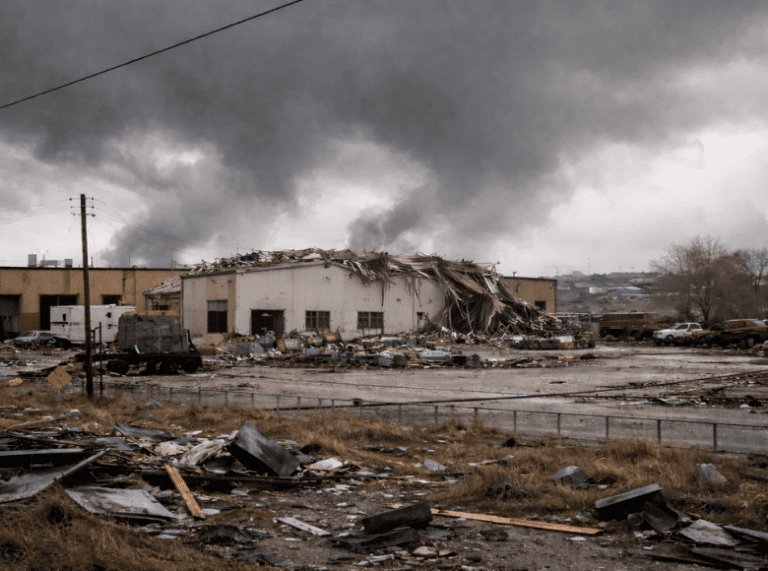
Tornadoes can turn a thriving business into a pile of rubble in just a few seconds. One moment, you are running operations as normal; the next, your building and inventory are destroyed.
Tornado damage strikes with devastating speed, with property owners left facing an enormous clean-up and wondering how to go about filing an insurance claim. Most commercial property insurance policies that include windstorm coverage cover tornado damage. After the storm, insurance adjusters assess your claim, often undervaluing it, making it important to partner with a public adjuster to help ensure you receive the full settlement.
In 2025, the United States experienced record-breaking tornado activity, with destructive storms tearing through much of the eastern half of the country. Commercial property owners have learned that having tornado insurance and receiving full compensation are two very different things. Understanding how tornado damage insurance claims work and when to hire a public adjuster for tornado damage can mean the difference between fully rebuilding and struggling financially for years.
Understanding Tornado Damage in Commercial Properties
Tornado damage to commercial buildings can be widespread and complex. Unlike residential properties, commercial properties often have larger structures, specialized equipment, and high-value inventory.
In 2024, tornadoes caused more than $ 3.2 billion in insured losses nationwide. Yet insurers paid far less than actual replacement costs in thousands of claims, leaving property owners to cover massive financial gaps.
Common Types of Tornado Damage in Commercial Properties
Structural and Foundation Damage
- Structural Frame Failure: Extreme wind forces can bend or collapse steel framing, columns, and load-bearing walls, compromising overall building stability.
- Foundation Uplift and Movement: Intense pressure differentials may lift or shift structures, leading to cracking and long-term settlement issues.
Roof and Building Envelope Damage
- Roof Uplift and Removal: High winds can peel back roofing systems, exposing interiors to wind and water intrusion.
- Wall Panel and Cladding Loss: Exterior panels, curtain walls, and siding may detach, reducing weather resistance and structural integrity.
Window, Door, and Opening Damage
- Glazing Failure: Wind pressure and flying debris can shatter windows and skylights.
- Door and Bay Door Blowout: Overhead doors and loading bays are particularly vulnerable to wind damage, which can increase interior exposure.
Interior and Contents Damage
- Water Intrusion and Saturation: Rain driven by high winds can rapidly damage ceilings, flooring, equipment, and inventory.
- Displacement of Contents: Loose furnishings, machinery, and stored materials may be overturned or become airborne, increasing internal damage.
Mechanical, Electrical, and Utility Damage
- HVAC and Rooftop Equipment Loss: Units may shift, detach, or be destroyed, disrupting climate control and ventilation.
- Electrical System Failure: Damaged panels, exposed wiring, and power loss create safety hazards and operational shutdowns.
Debris Impact and Site Damage
- Projectile Damage: Wind-borne debris can puncture walls, roofs, and vehicles, expanding the damage footprint beyond the primary structure.
- Site Infrastructure Damage: Fencing, lighting, and signage may be damaged or destroyed.
Business Interruption and Secondary Losses
- Operational Shutdowns: Structural damage and unsafe conditions often force immediate closure of affected facilities.
- Extended Recovery and Increased Costs: Extensive repairs, debris removal, and code upgrades can significantly prolong downtime and raise restoration expenses.
Does Commercial Property Insurance Cover Tornado Damage?
In most cases, tornado damage is covered under a standard commercial property insurance policy. Tornadoes are usually considered windstorm events, which are covered perils under many policies.
Coverage often includes damage to the building structure, interior finishes, business personal property such as equipment and inventory, debris removal, and loss of income due to business interruption.
However, coverage depends on the specific policy language, limits, and exclusions. Not all policies are the same, and many contain conditions that affect how much is paid and how quickly.
What Is Typically Covered After a Tornado
Commercial property insurance may cover repairs or replacement of the building, including the roof, walls, windows, and doors. Interior damage, such as flooring, ceilings, lighting, and built-in fixtures, may also be included.
Business personal property coverage may apply to office furniture, computers, machinery, tools, raw materials, and finished goods that were damaged by the storm.
Many policies also include business income coverage. This helps replace lost revenue when a tornado forces your business to temporarily shut down. Extra expense coverage may pay for costs needed to continue operations at a temporary location.
Debris removal is another important coverage. Tornadoes often leave large amounts of debris that must be cleared before repairs can begin.
Common Coverage Limitations and Exclusions
While tornado damage is often covered, there are limitations that commercial property owners must understand.
Some policies have windstorm deductibles that are higher than standard deductibles. This means the property owner may pay more out of pocket before coverage applies.
There may be limits on business income coverage based on a specific time period or dollar amount. Flood damage is usually excluded unless you have a separate flood insurance policy. If rain enters the building through surface flooding rather than through wind-driven openings, coverage may be denied.
Wear and tear exclusions may also be used by insurance companies to reduce payments. Insurers may claim that certain damage existed before the tornado or was caused by poor maintenance.
Why Tornado Insurance Claims Are Challenging
Commercial tornado claims are often disputed. Insurance companies send their own adjusters to inspect the damage. These adjusters work for the insurer and their goal is to control claim costs.
Damage may be underestimated or overlooked. Structural damage inside walls or roofing systems may not be fully identified. Business interruption losses may be undervalued. Replacement costs may be calculated using lower-quality materials.
The claim process also requires detailed documentation, accurate estimates, and ongoing communication with the insurance company. Many business owners do not have the time or expertise to handle this while keeping their operations running.
What Is a Public Adjuster?
A public adjuster is a licensed insurance professional who represents the policyholder rather than the insurance company. Their role is to help commercial property owners prepare, document, and negotiate insurance claims to achieve a fair settlement.
Public adjusters understand policy language, damage assessment, construction costs, and insurance procedures. They act as the business owner’s advocate throughout the claim process.
How a Public Adjuster Helps with Tornado Damage Claims
One of the first ways a public adjuster helps is by reviewing the insurance policy in detail. They identify all applicable coverages, endorsements, and limits that may apply to tornado damage.
They conduct a thorough inspection of the commercial property. This includes visible and hidden damage that may not be obvious. Roof systems, structural components, electrical systems, and mechanical equipment are carefully evaluated.
Public adjusters prepare detailed damage estimates that reflect true repair and replacement costs. These estimates are often far more comprehensive than those prepared by insurance company adjusters.
They also document inventory losses and business interruption losses. This includes reviewing financial records, sales history, payroll, and operating expenses to accurately calculate lost income.
Managing Communication with the Insurance Company
Insurance claims involve constant communication. Requests for documents, inspections, and explanations can quickly become overwhelming.
A public adjuster manages all communication with the insurance company on behalf of the business owner. They respond to adjuster requests, attend inspections, and present evidence to support the claim.
This reduces stress for the property owner and prevents mistakes that could delay or reduce payment.
Negotiating a Fair Settlement
One of the most valuable roles of a public adjuster is negotiation. Insurance companies often make initial settlement offers that are lower than the true cost of loss.
Public adjusters use their documentation and policy knowledge to challenge low offers. They negotiate for full coverage of repairs, replacements, and business income losses.
If disputes arise, a public adjuster can assist with appraisal or other dispute-resolution methods permitted under the policy.
Protecting Your Business Financially
After a tornado, cash flow is critical. Delays or underpayments can put a commercial property owner at serious financial risk.
By maximizing the insurance settlement, a public adjuster helps ensure that repairs are completed properly, operations resume sooner, and long-term financial stability is protected.
Their involvement often results in higher settlements than those obtained without professional representation.
When to Hire a Public Adjuster
It is best to contact a public adjuster as soon as possible after tornado damage occurs. Early involvement allows them to guide emergency repairs, document damage before it changes, and prevent costly mistakes.
Public adjusters can also help if a claim has already been filed and you believe the settlement is too low or the claim was denied unfairly.
How Continental Adjusters Help Policyholders
Continental Adjusters has helped secure more than four billion dollars in settlements for clients nationwide. Our professionals have extensive experience handling tornado damage claims. Our team conducts comprehensive property inspections, reviews policies line by line to maximize coverage and prepares proof-of-loss documentation that insurers cannot easily dispute.
We handle all communication with the insurance company, and our expertise results in settlements that are 70% to 200% higher than initial offers.
Frequently Asked Questions About Tornado Damage Claims
Can a public adjuster help if my tornado claim was underpaid or denied?
Yes. A public adjuster can review your policy, document the damages, and challenge low settlement offers or wrongful denials. They negotiate directly with the insurer to pursue the full value of your claim. This often results in significantly higher recoveries.
How long does a tornado insurance claim take to settle?
Tornado claims can take several weeks to several months, depending on damage severity and claim complexity. Large losses, inspections, and disputes can extend timelines. Delays are common when hidden damage is discovered.
Can tornado damage cause long-term structural issues?
Yes. Tornado winds can weaken framing, roofing systems, and foundation connections. These issues may not be immediately visible but can worsen over time. Undetected structural damage can lead to costly future repairs.
What if I disagree with the insurance company’s damage estimate?
You can challenge it. A public adjuster can provide an independent assessment of your damages, document the loss thoroughly, and negotiate with the insurer on your behalf. Presenting their detailed report often leads to a higher settlement.
Can a public adjuster help with partial claims or supplemental claims?
Absolutely. If your initial claim didn’t cover all damages, a public adjuster can help file a supplemental claim to recover additional losses, especially if new or hidden damage is discovered after the initial inspection.
Get the Full Settlement You Deserve
Tornado damage is devastating. It can create an immediate crisis and lead to long-term financial challenges. While insurance should provide the resources needed for full recovery, securing fair compensation requires professional expertise.
If your property has suffered tornado damage, contact Continental Adjusters today for a free consultation. Let your recovery begin with just one call.