

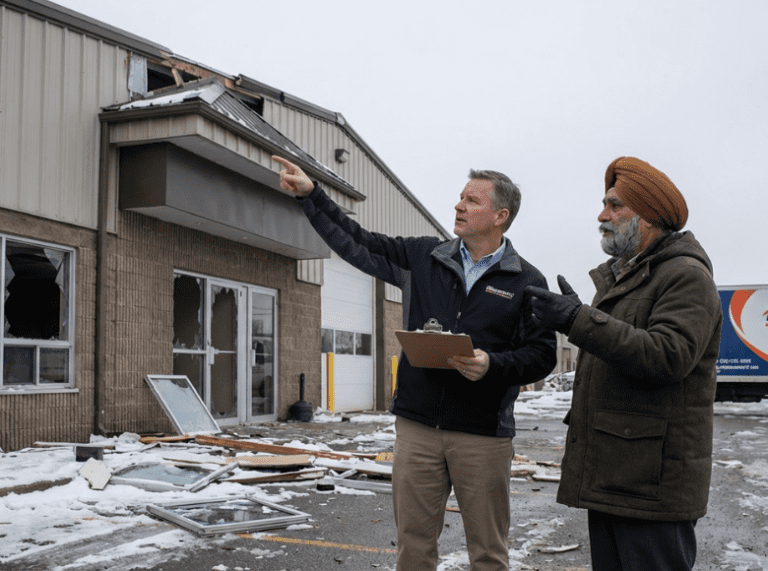
The bomb cyclone that swept across the East Coast last week brought extreme winter conditions that many commercial property owners were not prepared for. In a matter of hours, record snowfall, hurricane-force wind gusts, whiteout conditions, and plunging temperatures caused widespread damage to buildings, forced business closures, and disrupted operations across multiple states.
For many businesses, the storm did more than damage roofs and parking lots. It triggered structural failures, water intrusion from melting snow and ice dams, mechanical system damage, and prolonged interruptions that continue well after the snow has stopped falling. What follows is not just cleanup — it is a complex insurance claim process that will determine how much of your loss you actually recover.
Understanding the Impact of Last Week’s Bomb Cyclone
A bomb cyclone is a rapidly intensifying winter storm that occurs when atmospheric pressure drops at least 24 millibars within 24 hours. The most recent East Coast event intensified quickly, producing blizzard-like conditions, sustained high winds, and heavy, wet snow that accumulated faster than most structures could safely withstand.
Unlike coastal hurricanes, winter bomb cyclones often cause damage that is less obvious but equally costly. The weight of snow and ice places extreme stress on roofs, drains, canopies, and structural systems. When combined with wind uplift and rapid freeze-thaw cycles, even well-maintained commercial buildings can suffer serious damage.
How the Recent Storm Damaged Commercial Properties
Roof and Structural Failures
Heavy snow accumulation caused roof deflection, membrane separation, collapsed drains, and compromised trusses. In some cases, drifting snow created uneven loads that exceeded design limits, resulting in partial roof collapse or long-term structural weakening.
Ice Dams and Water Intrusion
As temperatures fluctuated, ice dams formed along roof edges, forcing melting snow back under roofing systems and into walls and ceilings. This led to insulation saturation, interior water damage, and hidden moisture conditions that increase the risk of mold.
Wind-Driven Snow and Ice Infiltration
High winds pushed snow and ice into vents, roof seams, doors, and window systems. Once inside, melting snow damaged finishes, electrical systems, and inventory.
Mechanical and Utility Damage
Rooftop HVAC units were exposed to extreme cold, ice loading, and wind displacement. Frozen pipes, burst sprinkler lines, and electrical failures were common, particularly in buildings that lost power during the storm.
Site and Access Damage
Parking structures, loading docks, fencing, signage, and exterior equipment sustained damage from snow load, ice expansion, and plowing operations. Many businesses experienced delayed reopening due to unsafe site conditions.
The Hidden Losses Many Owners Miss
Some of the most expensive damage caused by the bomb cyclone is not immediately visible. Prolonged moisture trapped behind walls, under roofing systems, or within mechanical components can lead to long-term deterioration if not properly identified and documented.
In addition, business interruption losses often far exceed the cost of physical repairs. Forced closures, reduced occupancy, supply chain disruptions, and temporary relocation expenses are frequently undervalued or excluded entirely unless properly documented and supported.
Why Insurance Claims After This Storm Are Being Challenged
Insurance companies closely scrutinize winter storm claims, especially after large-scale events like last week’s bomb cyclone. Common issues include:
- Disputes over whether damage was caused by snow load, wind, ice, or water
- Attempts to classify losses as wear and tear or deferred maintenance
- Underestimation of roof, structural, and mechanical damage
- Denial or reduction of business interruption claims due to “insufficient documentation”
- Excessive depreciation applied to critical systems
Without expert representation, many commercial property owners unknowingly accept settlements that fail to cover the true cost of recovery.
How a Public Adjuster Protects Your Recovery
A public adjuster represents you — not the insurance company. After a bomb cyclone, their role is to ensure every category of damage is identified, documented, and tied directly to the storm.
Public adjusters conduct detailed inspections to uncover hidden losses, including moisture intrusion, structural stress, and mechanical system damage. They coordinate with engineers and specialists when necessary and prepare comprehensive documentation that meets insurer standards.
They also analyze your policy in full, identifying coverage provisions and endorsements that may apply to snow load, ice damage, water intrusion, and business interruption — areas insurers often minimize or overlook.
Most importantly, a public adjuster manages communication and negotiation with the insurance carrier, countering delay tactics, improper exclusions, and underpayment strategies.
Why Commercial Property Owners Choose Continental Adjusters
Continental Adjusters has decades of experience representing commercial property owners after catastrophic weather events, including severe winter storms and bomb cyclones. With more than $4 billion recovered for clients nationwide, their team understands both the technical damage and the insurance strategies required to secure full and fair settlements.
From initial inspection through final resolution, Continental Adjusters handles every aspect of the claim so business owners can focus on recovery — not fighting their insurer.
Final Thoughts
The recent East Coast bomb cyclone proved that winter storms can be just as destructive as hurricanes. Heavy snow, ice, and extreme wind place enormous stress on commercial buildings and create complex insurance claims that are rarely straightforward.
The greatest financial risk often comes after the storm, when claims are undervalued, delayed, or denied. Professional representation ensures that damage is not minimized and that your business receives the compensation it is entitled to under the policy.
If your commercial property was impacted by last week’s bomb cyclone, do not navigate the insurance process alone. Contact Continental Adjusters to protect your investment and maximize your recovery.