

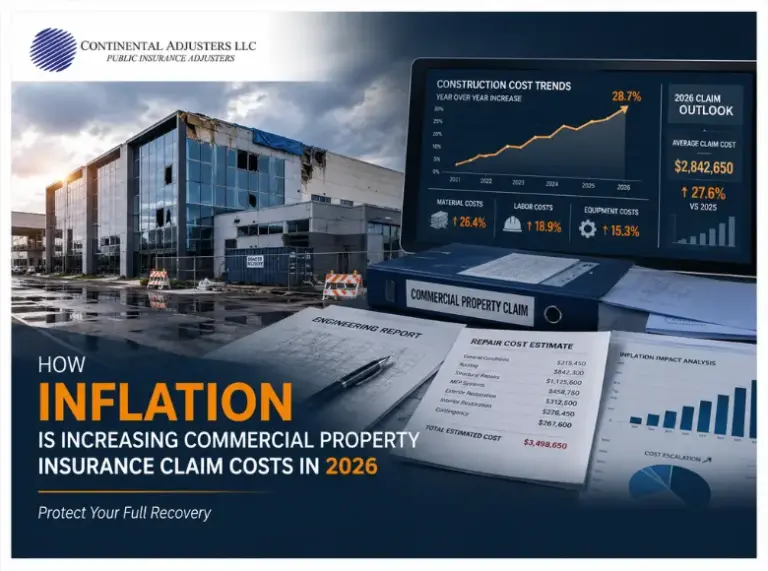
A commercial property loss has always been expensive, but in 2026, inflation is making the financial impact even greater. Rising prices for construction materials, labor, equipment, and transportation have significantly increased the cost of repairing or rebuilding damaged commercial properties. What might have been a straightforward commercial property insurance claim a few years ago has now become a far more complex process that requires detailed documentation, accurate cost estimates, and careful policy interpretation.
For business owners, this means that settling an insurance claim is no longer just about reporting the damage. It is about proving today’s higher replacement costs, documenting every covered expense, and ensuring the insurance settlement reflects current market conditions. Without proper preparation, businesses may face unexpected out-of-pocket costs that can delay recovery and disrupt operations.
As experienced commercial public adjusters, we have seen firsthand how inflation has changed the claims process. In this article, we explain how inflation is increasing commercial property insurance claim costs in 2026, why many businesses struggle to recover their full losses, and how professional claim representation can help maximize commercial insurance loss recovery.
Why Inflation Is Driving Higher Claim Costs
Inflation affects every stage of a commercial property loss. When a building suffers damage from fire, storms, water, vandalism, or another covered event, insurers must evaluate today’s replacement costs rather than prices from several years ago.
Several factors continue to increase claim values in 2026, including:
- Higher prices for construction materials
- Rising labor wages across skilled trades
- Increased equipment replacement costs
- Longer project timelines
- Supply chain disruptions
- New building code requirements during reconstruction
For example, replacing a commercial roof or repairing structural damage often costs substantially more today than it did only a few years ago. HVAC systems, electrical equipment, roofing materials, steel, concrete, and specialized machinery have all experienced price increases that directly impact commercial insurance claims.
These higher costs make accurate claim documentation more important than ever.
The Gap Between Estimated Costs and Actual Costs
One of the biggest challenges business owners face is the difference between initial insurance estimates and the actual cost of completing repairs.
Insurance estimates are often prepared early in the claims process. However, contractors may not provide final pricing until demolition begins or hidden damage is discovered. During lengthy repair projects, material prices can continue changing, creating additional expenses that were not included in the original estimate.
Without careful claim management, property owners may struggle to recover these additional costs.
This is one reason many commercial insurance claims after inflation require continuous documentation instead of relying only on the first estimate submitted to the insurance carrier.
Business Interruption Losses Are Becoming More Expensive
Inflation doesn’t only increase repair costs. It also increases the financial impact of business interruptions.
When repairs take longer because of labor shortages or delayed materials, businesses may experience:
- Lost revenue
- Higher operating expenses
- Temporary relocation costs
- Increased payroll obligations
- Additional equipment rental expenses
Every extra month that a business remains partially closed can significantly increase the overall insurance claim.
Properly documenting these financial losses is essential for maximizing commercial insurance loss recovery, especially for businesses operating with tight profit margins.
Why Accurate Documentation Matters More Than Ever
As inflation increases the cost of repairing and rebuilding commercial properties, insurance companies typically take a closer look at higher-value claims. A well-documented commercial property insurance claim helps support the extent of the damage and the true cost of recovery, making it easier to justify the amount being requested.
To build a strong claim, business owners should gather documents such as:
- Repair and reconstruction estimates
- Contractor proposals and bids
- Property inspection reports
- Equipment and inventory records
- Financial statements
- Business interruption calculations
- Photos and videos of the damage
- Invoices, receipts, and proof of replacement costs
Missing or incomplete documentation can slow the claims process and make it more difficult to recover the full amount owed under the policy. Keeping organized records and supporting every expense with clear evidence helps demonstrate that the claimed costs are reasonable, necessary, and covered by the insurance policy.
Policy Limits May No Longer Reflect Current Replacement Costs
Many commercial properties were insured several years ago using property values that no longer reflect today’s rebuilding costs.
If insurance limits have not been updated regularly, business owners may discover that their coverage is insufficient after a major loss.
Inflation has widened the gap between insured values and actual replacement costs for many commercial buildings.
Property owners should periodically review their insurance policies to ensure coverage limits remain aligned with current market conditions. While updating coverage before a loss is the best approach, understanding available policy provisions after a loss can also help identify potential sources of additional recovery.
Why Commercial Claims Require More Expertise in 2026
Inflation has added another layer of complexity to the claims process. Rising repair costs, changing market prices, and longer reconstruction timelines mean that settling a commercial property insurance claim now requires more than simply estimating the visible damage.
This growing complexity is reflected across the insurance industry. The Insurance Information Institute (Triple-I) reports that the U.S. property and casualty insurance industry has faced several years of inflation-driven claims costs and elevated catastrophe losses. As a result, commercial property claims have become more expensive and require more detailed documentation, accurate cost estimates, and careful policy interpretation to support a fair settlement.
A thorough claim should consider several factors, including:
- Current construction and material costs
- Competitive contractor estimates
- Building code upgrades required during repairs
- Accurate replacement cost calculations
- Business interruption losses
- Equipment depreciation and replacement values
- Policy terms, endorsements, and coverage limits
Overlooking any of these elements can reduce the value of a claim and leave a business paying for expenses that may have been covered. Taking a detailed approach helps ensure all eligible damages are identified, properly documented, and included before the claim is finalized.
How Public Adjusters Help During Inflation
As inflation continues to increase repair and rebuilding costs, many commercial property owners enlist public adjusters assistance to help manage complex insurance claims. Higher claim values often require more detailed documentation, stronger evidence, and careful policy interpretation to support the full amount of the loss.
Unlike insurance company adjusters, public adjusters represent the policyholder. Their goal is to protect the property owner’s interests by preparing a well-supported commercial property insurance claim and negotiating for a fair settlement.
Public adjusters can help by:
- Inspecting and documenting all covered property damage
- Identifying losses that may be missed during the initial inspection
- Preparing detailed repair and replacement cost estimates
- Organizing supporting documents, invoices, and records
- Reviewing policy terms, coverage, and endorsements
- Calculating business interruption and extra expense losses
- Negotiating directly with the insurance company throughout the claims process
With inflation driving up the cost of repairs and reconstruction, professional representation can help ensure that eligible damages are fully documented and that every recoverable expense is properly included in the claim.
Final Thoughts
Inflation continues to increase the cost and complexity of every commercial property insurance claim. With higher repair costs, longer reconstruction timelines, and changing market prices, businesses need accurate documentation and a well-prepared claim to recover what they are entitled to under their policy.
If your business has experienced property damage, Continental Adjusters is here to help. Contact our team today for expert public adjusters assistance and let us help you maximize your commercial insurance loss recovery.