

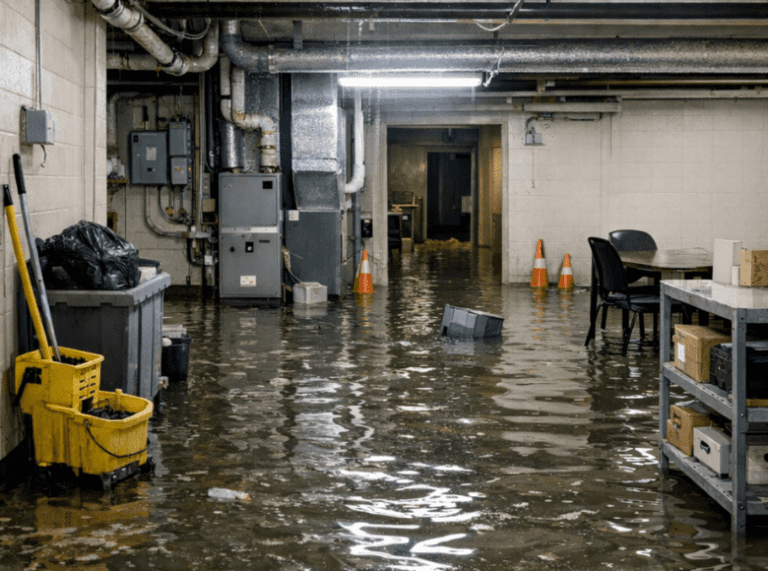
Basement flooding has become an increasingly common disaster in the United States, leaving property owners feeling hopeless. Whether it is heavy rainfall, sudden spring snowmelt, or groundwater intrusion, the financial and operational impact of this disaster can be devastating.
What appears to be standing water and wet belongings can result in extensive damage, including compromised foundations, destroyed mechanical systems, and dangerous mold growth. For most property owners, the real shock comes when they discover that their insurance settlement covers only a fraction of the actual losses due to documentation gaps, policy exclusions, and underestimated repair costs.
Here is a complete guide on the causes of basement flooding, what insurance may cover, and how experienced public adjusters protect your financial recovery.
What Is Basement Flooding?
Basement flooding occurs when water enters below-ground spaces through multiple pathways, including foundation cracks, overwhelmed drainage systems, failed sump pumps, or rising groundwater. Unlike surface flooding, basement intrusions often result from a complex combination of weather events and soil conditions, making insurance coverage difficult to determine. Heavy rainfall, snowmelt, spring thaw, and hurricanes are common causes of basement flooding.
What Causes Basement Flooding?
Basement flooding is caused by a combination of structural, environmental, and mechanical factors. When cracks form in foundation walls or floors, groundwater seeps in, which occurs more often during prolonged rainfall. Poorly maintained or clogged gutters, instead of directing water away, funnel it toward the foundation. Overloaded municipal drainage systems may cause sewer backups during heavy storms. Additionally, improper grading around the property, malfunctioning sump pumps, and high groundwater tables can increase the risk of water intrusion and basement flooding.
What Is a Basement Flooding Insurance Claim?
A basement flooding insurance claim is a formal request to an insurer for financial compensation after water damage affects a below-ground space. These claims are often long and complex because policies frequently exclude certain causes of flooding and cover only specific items.
Commercial property owners face substantial flood risk and unique insurance challenges. Under the National Flood Insurance Program (NFIP), commercial buildings and commercial personal property can each be insured up to $500,000, but standard commercial insurance rarely covers flood damage at all, requiring business owners to buy separate flood insurance policies. FEMA stresses that flooding can occur anywhere, and NFIP coverage is available to all property owners whether or not they are in high-risk zones. Despite this, a recent analysis showed that about 92 percent of at-risk properties lacked NFIP coverage as of 2023, leaving most commercial properties uninsured against flood damage. Moreover, NFIP policies generally do not cover business interruption or income losses, meaning businesses can still face significant financial strain even with structural coverage in place.
Insurance coverage may include sudden and accidental water damage from burst pipes, appliance failures, or sewer backups. However, flood damage from external sources such as storm surge or surface water requires separate flood insurance through the National Flood Insurance Program (NFIP) or private carriers. As a result, many property owners are confused when they discover that their standard policy does not cover the losses they assumed were protected after a basement flooding event.
What Basement Flooding Insurance May Cover?
Standard basement flooding insurance policies may cover structural repairs and damaged mechanical systems, including electrical systems, water heaters, and furnaces. Coverage may also extend to contents and property damage, as well as mold remediation if addressed promptly.
Separate flood insurance policies cover damage caused by external water sources, including surface water, storm surge, and groundwater seepage. Business interruption coverage may also apply. However, coverage excludes damage caused by lack of maintenance, gradual seepage, or pre-existing conditions.
Common Mistakes That Reduce Basement Flooding Claims
Most property owners make mistakes that significantly reduce their settlement amounts. These mistakes include delaying damage documentation, accepting initial insurance offers without professional review, and overlooking hidden damage within insulation, walls, and structural components.
Many businesses fail to identify all covered losses, miss policy deadlines, or submit incomplete or inaccurate documentation. In some cases, property owners dispose of damaged items before the insurance inspection. Professional public adjuster representation helps prevent costly errors that often lead to underpayment or claim denial.
Insurance carriers frequently dispute whether water damage qualifies as a covered “sudden and accidental” loss rather than excluded flooding. They may claim the damage resulted from maintenance neglect, undervalue repair costs, or apply aggressive policy exclusions. Without proper documentation and experienced advocacy, property owners often accept settlements that cover only 40–60% of their actual losses.
How Continental Adjusters Maximizes Basement Flooding Claims
Continental Adjusters has recovered more than $4 billion for clients nationwide. Our team of professional experts conducts comprehensive damage assessments to identify structural, mechanical, and content losses. This process helps uncover hidden damage that insurers often overlook, including damage beneath flooring and within building systems.
Our team prepares complete proof-of-loss documentation with precise valuations. All negotiations with insurance carriers are handled with expertise, and low settlement offers are challenged. This ensures policyholders receive the maximum settlement they are entitled to under their policy.
FAQs
Is basement flooding covered by commercial property insurance?
Usually, it’s not. Standard commercial property policies do not cover flooding caused by surface water, heavy rain, or rising groundwater unless a separate flood insurance policy is in place.
Does commercial insurance cover sewer backup in a basement?
Only if the policy includes a sewer or drain backup endorsement. Without this add-on, sewer backup damage is typically excluded.
Can basement flooding cause business interruption coverage?
Yes. But only if the flooding results from a covered peril. Business interruption coverage does not apply if the flooding itself is excluded under the policy.
How can insurers deny basement flooding claims?
Insurers may deny claims if the damage is caused by:
- Flooding or groundwater (excluded peril)
- Poor maintenance or pre-existing issues
- Lack of required endorsements
- Policy limits or exclusions specific to basements
Should I hire a public adjuster for basement flooding?
Yes, especially for large or disputed claims. A public adjuster can review coverage, document damages accurately, and negotiate with the insurer to help maximize your settlement.
Final Thoughts
Basement flooding can lead to devastating financial losses. When you understand coverage limitations, document damage properly, and secure expert representation, full compensation becomes achievable. Assistance from a professional public adjuster is not an option. It is a necessity for complete recovery.
Don’t Let Basement Flooding Drain Your Finances. Get Expert Help Now!
If your property has experienced basement flooding or you need guidance on flood insurance coverage, contact Continental Adjusters today. Our licensed public adjusters ensure your claim reflects true losses and you receive the maximum settlement.